The Room Rental (Sub-let) Blueprint: How to Turn a Low-Yielding 3% Condo into a High-Yielding 8% Cash-Flow Machine
The traditional buy-to-let model in major Malaysian cities is broken. If you buy a standard 3-bedroom condominium in the Klang Valley, Penang, or Johor Bahru for RM500,000, the average market rate for a whole-unit rental usually hovers around RM1,200 to RM1,500 per month.
After deducting your monthly mortgage installments, JMB maintenance fees, and property taxes, you are left with a measly 3% gross rental yield—frequently resulting in negative monthly cash flow.
To beat this low-yield trap, seasoned investors are shifting to the Room Rental (Sub-let) strategy.
By renting out your property room-by-room to individual young professionals or university students, you maximize the spatial utility of the unit. This blueprint breaks down exactly how to convert a low-yielding residential investment into a high-yielding, 8%+ cash-flow machine without breaking local housing regulations.
1. The Math: Whole-Unit vs. Room-by-Room Breakdown
To understand why this strategy is so powerful, let's look at the financial performance of a typical 1,100 sq ft, 3-bedroom condominium located near an MRT station in Cheras or Petaling Jaya:
Scenario A: Whole-Unit Rental
- Property Purchase Price: RM500,000
- Whole-Unit Monthly Rent: RM1,500
- Gross Annual Income: RM18,000
- Gross Rental Yield: 📉 3.6%
Scenario B: The Room Rental Blueprint
By adding a strategic partition wall to create a 4th bedroom and furnishing each room individually, the rent structure transforms completely:
- Master Room (with private bathroom): RM900
- Medium Room 1: RM700
- Medium Room 2: RM650
- Small Room (Partitioned): RM550
- Total Combined Monthly Rent: RM2,800
- Gross Annual Income: RM33,600
- Gross Rental Yield: 🏆 6.72% to 8.5% (depending on final renovation costs)
By changing how you lease the space, you increase your monthly top-line revenue by RM1,300, transforming a negative cash-flow liability into a highly profitable asset.
2. Structural Optimization & Partition Rules
Executing this strategy successfully requires more than just throwing single mattresses into empty rooms. You must optimize the floor plan while staying compliant with local laws.
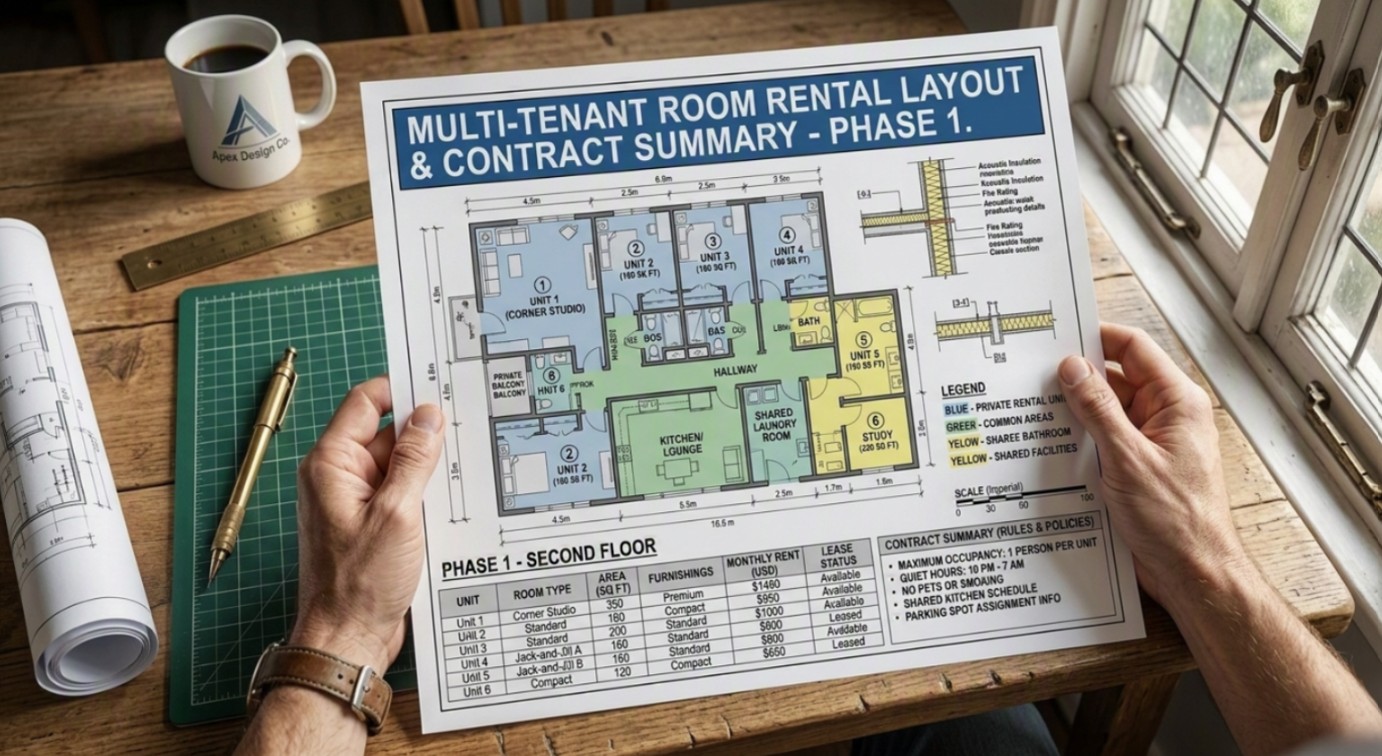
[Standard 3-Bed Layout] ──➔ [Add 1 Fire-Rated Partition Wall] ──➔ [4-Bed High-Yield Layout]
- The Hallway Partition: Use high-quality gypsum boards with internal rockwool insulation for soundproofing. Erect the partition in a corner of the large living hall that has direct access to a window. Never block the primary exit paths or fire escape routes.
- Local Council Compliance: Check your local municipal council guidelines (such as DBKL, MBPJ, or MBSJ). For example, DBKL rules strictly state that residential units cannot be partitioned into micro-rooms that resemble commercial dormitories. Ensure every room has proper ventilation, natural light, and a minimum living area that complies with local building by-laws.
- JMB/MC Approval: Always review your condominium's house rules. Some high-end joint management bodies prohibit room sub-letting entirely or charge additional security fees for resident access cards. Target medium-cost, transit-oriented developments where room rental configurations are widely accepted.
3. The Tech Fix: Individual Utility Sub-Meters
The number one profit killer in a shared room-rental unit is the monthly electricity bill. When utilities are bundled into the rent, tenants will leave their air conditioners running 24/7—even when they are at work—causing your Tenaga Nasional Berhad (TNB) bill to skyrocket and wipe out your profit margins.
- The Solution: Install digital smart sub-meters for the air conditioning units in every individual bedroom.
- The Pay-Per-Use Model: Keep the base rent inclusive of high-speed Wi-Fi, water, and common area electricity, but make the room's air-con usage strictly pay-per-use.
- Smart Apps: Use digital sub-meter systems (like LinkHome or Sintech) that utilize prepaid mobile apps. Tenants must top up their utility credit via an app to use their air conditioning. This single upgrade cuts overall energy wastage by up to 50% and protects your monthly net returns.
4. Furnishing for the Modern Urban Tenant
Room-rental tenants are paying for convenience. To command premium room rates, your property must look like a boutique co-living space, not a cheap student hostel.
- In the Bedrooms: Provide a comfortable bed frame with a quality mattress, a wardrobe, a study desk, a comfortable ergonomic chair, blackout curtains, and an individual air conditioning unit.
- In the Shared Common Areas: Keep the living room free of a television to prevent noise complaints between housemates. Instead, focus heavily on functional shared utilities: a large two-door refrigerator, a heavy-duty washing machine, a water dispenser (like Coway or Cuckoo), a microwave, and a dining table set.
- The Value-Add Sweeteners: To attract high-quality working professionals, bundle complimentary high-speed Wi-Fi (100Mbps–500Mbps) and a bi-weekly cleaning service for the shared toilets, kitchen, and living corridors into the rental price.
5. Tenant Management and House Rules
Renting to four individual strangers increases your management workload. To keep your cash-flow machine running smoothly without constant drama, you must enforce a strict operational framework.
- The Individual Tenancy Agreement: Issue separate, individual LHDN-stamped tenancy agreements for each room. Explicitly state the specific room boundaries, house rules, and room-specific deposit terms.
- Strict House Rules: Create a legally binding "Code of Conduct" document signed by all housemates. Enforce strict rules regarding quiet hours (e.g., no loud noise after 10:00 PM), zero smoking indoors, a strict no-pets policy, and clear rotating cleaning responsibilities for kitchen use.
- Gender-Segregated Units: For easier tenant onboarding and long-term harmony, group your units by gender (e.g., an all-female unit or an all-male unit). This dramatically reduces social friction and makes tenants feel safer and more comfortable in shared spaces.