When shopping for high-rise sub-sale properties in prime Klang Valley hubs like Mont Kiara, Subang Jaya, or Cheras, investors often focus entirely on the Gross Rental Yield. Seeing a condo that costs RM400,000 renting out for RM2,000 a month makes for an enticing 6% gross return on paper.
However, looking only at the gross return is a dangerous trap.
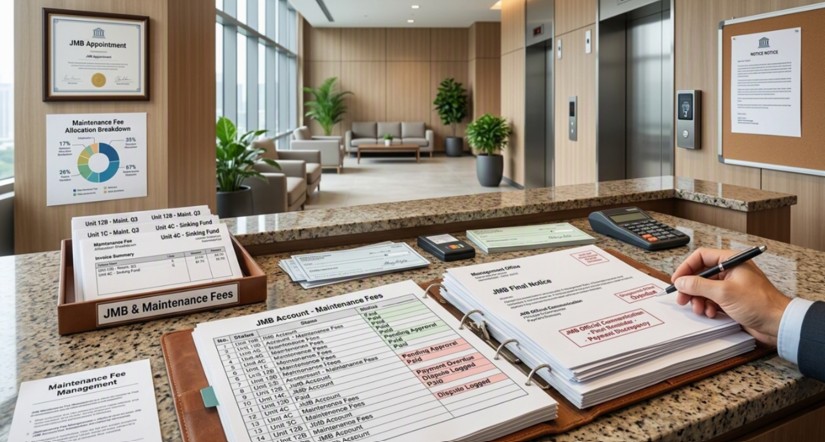
In Malaysia, owning a stratified property means you are legally bound by the Strata Management Act 2013 to pay monthly service charges to a Joint Management Body (JMB) or Management Corporation (MC).
These monthly costs—consisting of Maintenance Fees and Sinking Funds—are fixed cash outflows that you must pay out of pocket every single month, whether your unit is tenanted or empty.
Ignoring these fees will completely distort your math, turning a seemingly highly profitable property into a cash-flow drain. Here is how to factor JMB fees into your equations to calculate your true net rental yield.
Under the Strata Management Act, your monthly building bill is split into two distinct funds. Both are calculated based on the allocated share units of your property (essentially, the larger your square footage, the more you pay).
Maintenance Fee (The Service Charge)
This covers the day-to-day operational expenses of running the condominium complex.
Sinking Fund (The Emergency Reserves)
By law, the JMB must collect a separate sinking fund, which is typically capped at 10% of the maintenance fee total.
To understand the real-world damage these fees can do to your profits, look at the difference between the two primary real estate calculations:
The Math Case Study: High-End vs. Medium-Cost Condo
Let’s look at two real-world investment scenarios in the Klang Valley, both priced at a purchase value of RM450,000 and renting for RM2,200 per month:
| Financial Metric | Property A: High-End Luxury Condo | Property B: Mature Transit Condo |
|---|---|---|
| Purchase Price | RM450,000 | RM450,000 |
| Gross Monthly Rent | RM2,200 | RM2,200 |
| Gross Rental Yield | 5.86% | 5.86% |
| JMB Fee Rate | RM0.45 per sq ft (1,000 sq ft) | RM0.25 per sq ft (1,000 sq ft) |
| Monthly JMB Fees | RM450 (Maint: RM409 + Sinking: RM41) | RM250 (Maint: RM227 + Sinking: RM23) |
| Annual JMB Cost | RM5,400 | RM3,000 |
| True Net Annual Rent | RM21,000 | RM23,400 |
| True Net Rental Yield | 📉 4.66% | 🏆 5.20% |
The Verdict:
Despite having the exact same purchase price and gross rental income, Property A loses an extra RM2,400 every single year to higher service charges. Over a 10-year investment horizon, that high per-square-foot rate drains RM24,000 straight out of your pocket.
A high maintenance fee is painful, but a mismanaged or broke JMB is catastrophic for an investor. If the JMB runs out of cash, the building enters a spiral of decay that kills your property's market value and driving away quality tenants.
When viewing sub-sale properties, watch out for these red flags:
Uncollected Fees ➔ Facility Decay ➔ Dropping Property Values ➔ Tenant Vacancies
To protect your cash flow from unexpected fee hikes and maximize your net returns, integrate these validation steps into your property hunting routine:
To avoid delays and keep your legal bills low, ensure you have an organized file containing the following items:
If your primary goal is to recover unpaid rent rather than evicting the tenant, ask your lawyer about a Writ of Distress under the Distress Act 1951.
This is an independent, often faster court application where a bailiff enters the property to freeze and auction the tenant's furniture and appliances to pay off up to 12 months of rent arrears. However, note that a distress action does not cancel the tenancy or evict the tenant—it only recovers money.
Ad content here
Ad content here